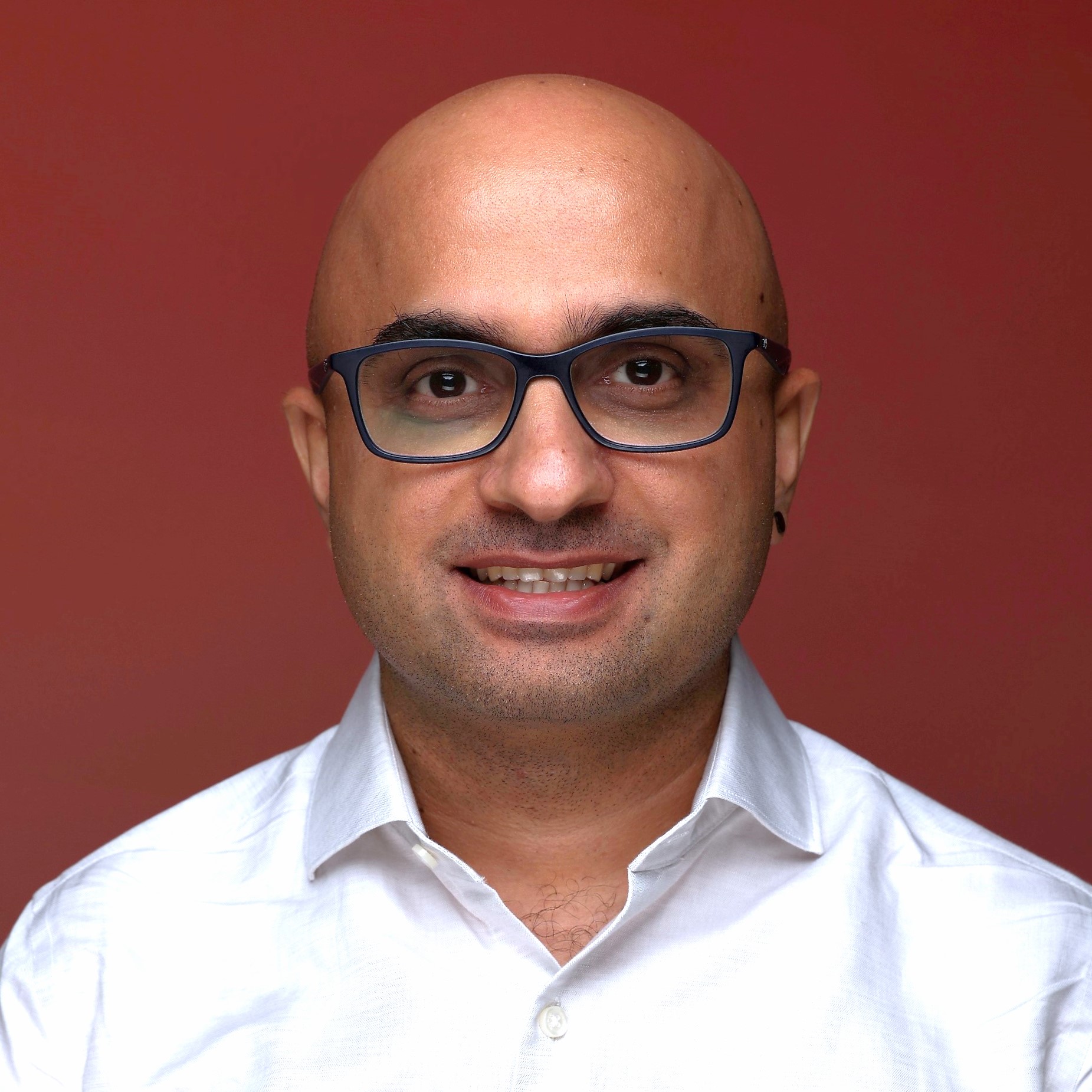
About
I build AI products and the teams behind them.
I see building products as an art that combines artificial intelligence, human understanding, and technology to create experiences that delight people and deliver value.
I work across product and technology: understanding people, exploring an idea, designing the experience, building the system and operating it. I enjoy solving complex problems that affect people, and building teams that can turn those ideas into useful products.
Companies already hold vast amounts of data on customers, deals, products and operations, fragmented across databases, SaaS apps and documents. The same customer can exist under different identities, surrounded by duplicated, outdated or irrelevant records. Agents that work for hours across thousands of operations need the right context at the right time. My work turns that data into compact, governed memory agents can rely on: identity resolution, memory architecture, data reduction, accuracy, privacy, and the cost of running agents over hundreds of thousands of records.
I’m most interested in what happens when a company moves from a handful of AI assistants to thousands of agents performing thousands of operations every day. At that scale, small problems with context, accuracy, latency and cost become major engineering problems, and the harnesses, guardrails, verification and self-correction around the agents matter as much as the models.
- Co-founder and CTO, Personize
- 60+ enterprise customers in production
- Paper: Governed Memory, arXiv 2026
- Vancouver
Personize runs in production for teams in enterprise software, cybersecurity and cloud, and Personize Private runs on-premises or in private clouds for financial companies with strict privacy requirements. Some of the teams:
Also teams at Okta, Rubrik, Elastic, NiCE and SoftwareOne.
What I build now
- Governed personalization engineOne record of a person, an account and a campaign becomes a web page, an email sequence and a seller brief, checked by code.How it works
- Self-hosted memoryPersonize Private keeps customer memory in the customer’s own database, on-premises or in a private cloud, tidied while idle, with corrections proposed before they are written.The paper
- Agent-first engineeringAgentic Kanban: agents write most of the code over shared team memory, and developers take new roles that keep it production-grade. Cost per task fell from $16.38 to $5.30, coordination included.The playbook
Build for AI agents as the primary user.
Everything we ship assumes an agent on the other end: MCP servers, Skills, a CLI, and docs written for machines as much as for people.
Products and explorations
Alongside Personize, I build and explore products that put AI into different parts of human experience.
Peers uses AI for matchmaking and human connection. ShareInfo lets an agent share work from a session through a link, so other people and agents can read it and collaborate.
I have also worked on RC API, using populations of simulated AI personas to explore ideas and gather reactions, and on cybersecurity training that helps people understand employee and company data exposure to personalized attacks.
At Personize, my work on a general-purpose personalization engine brings together contextual intelligence, accuracy, governed execution and self-correction at scale.
How I got here
One question keeps coming back: can a machine understand what a person wants?
Models of places
Climate, water and drought models: good at the system, blind to the people inside it.
Models of choices
Decision and preference modeling for infrastructure and energy. What people say and what they choose measure different things.
Software for groups
Knowledge, search and community products that help organizations keep and share what they know.
Machines that read and talk
Messenger chatbots from 2016, and language models that read the public record for market intelligence.
Machines that write for one
Since 2020, LLMs that personalize at scale. Today: memory, agents and governance in production.
GIS, machine learning, search, NLP, chatbots, LLMs and agents, for SMBs through Fortune 500 companies.
How I build and lead
I build and lead teams across the product lifecycle, from customer research and experimentation to product design, architecture, development, implementation and operation. I connect that technical work with pricing, go-to-market, marketing and sales enablement, keeping product and technology at the center.
- 1Start from the decisionEvery AI feature begins with the decision it changes and how we will know it worked. The model comes later.
- 2AI where judgment adds value, code where certainty is availableThe model chooses; code checks.
- 3Close the distance between the demo and the systemEvaluation, fallbacks, cost ceilings and the failures you only see at scale.
- 4Be specific and true, or be honestly generalA confident wrong fact about a customer costs more than a message that says less.
- 5Asking measures the story people believe about themselvesBehavior measures the rest. Good systems listen to both.
Outside work
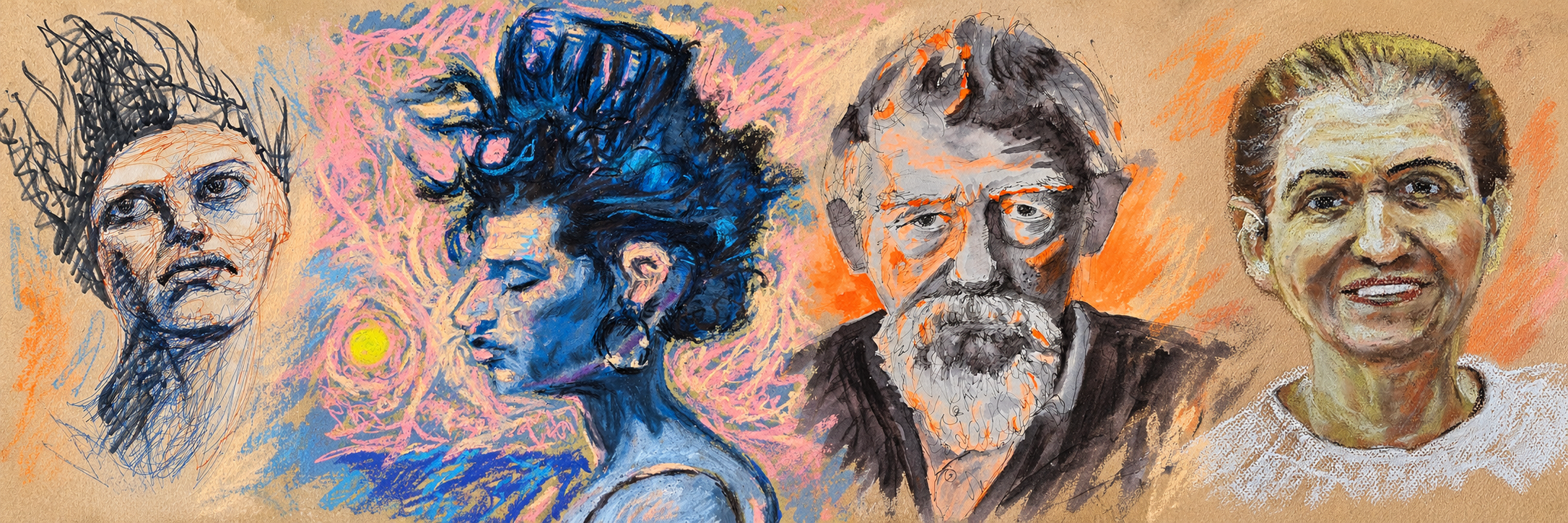 I also love making art with ink, pastel, watercolor, and charcoal. See my artwork
 Want to compare notes?
M.Sc., University of British Columbia · M.Sc., Isfahan University of Technology